The Role of Food Flavors in Ice Cream Manufacturing
Ice cream is one of the most popular frozen desserts worldwide. From traditional vanilla and chocolate to innovative fruit, nut, and specialty combinations, flavor is one of the most important factors influencing consumer preferences and product differentiation.
For ice cream manufacturers, developing an appealing flavor involves more than simply choosing an ingredient. Food flavors must work well with the product's formulation, processing conditions, storage environment, and intended sensory profile.
As consumer preferences continue to evolve, manufacturers are exploring new flavor combinations and customized solutions to create distinctive ice cream products. Understanding the role of food flavors in ice cream manufacturing can help businesses develop products that meet market expectations while maintaining consistent quality.
1. Why Food Flavors Matter in Ice Cream Manufacturing
Flavor is a key part of the overall ice cream experience. It influences the product's aroma, taste, and perceived richness.
Even when two ice cream products have similar textures and appearances, their flavor profiles can create very different consumer experiences.
Food flavors help manufacturers:
-
Develop recognizable and appealing flavor profiles.
-
Create consistent taste across different production batches.
-
Introduce new products and seasonal varieties.
-
Differentiate products in competitive markets.
-
Adapt formulations to regional and consumer preferences.
For industrial ice cream production, selecting a suitable flavor is particularly important because the ingredient must perform consistently within the manufacturer's specific formulation and production process.
2. Popular Food Flavors Used in Ice Cream Production
Different markets have different flavor preferences, but several flavor categories remain widely used in ice cream manufacturing.
2.1 Classic Flavors
Classic flavors continue to form an important part of the ice cream market.
Common examples include:
-
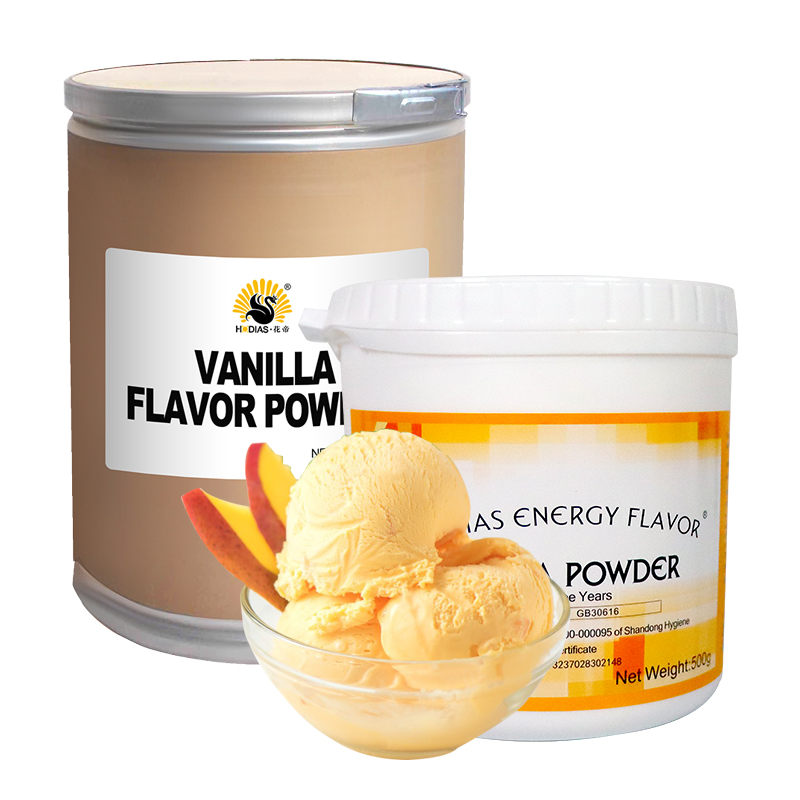
Vanilla
-
Chocolate
-
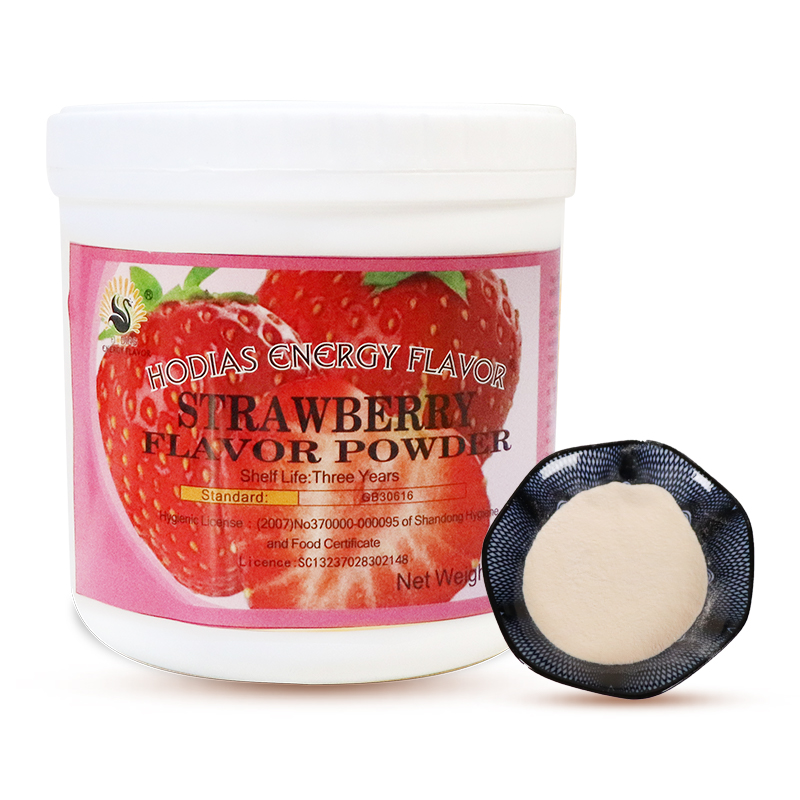
Strawberry
-
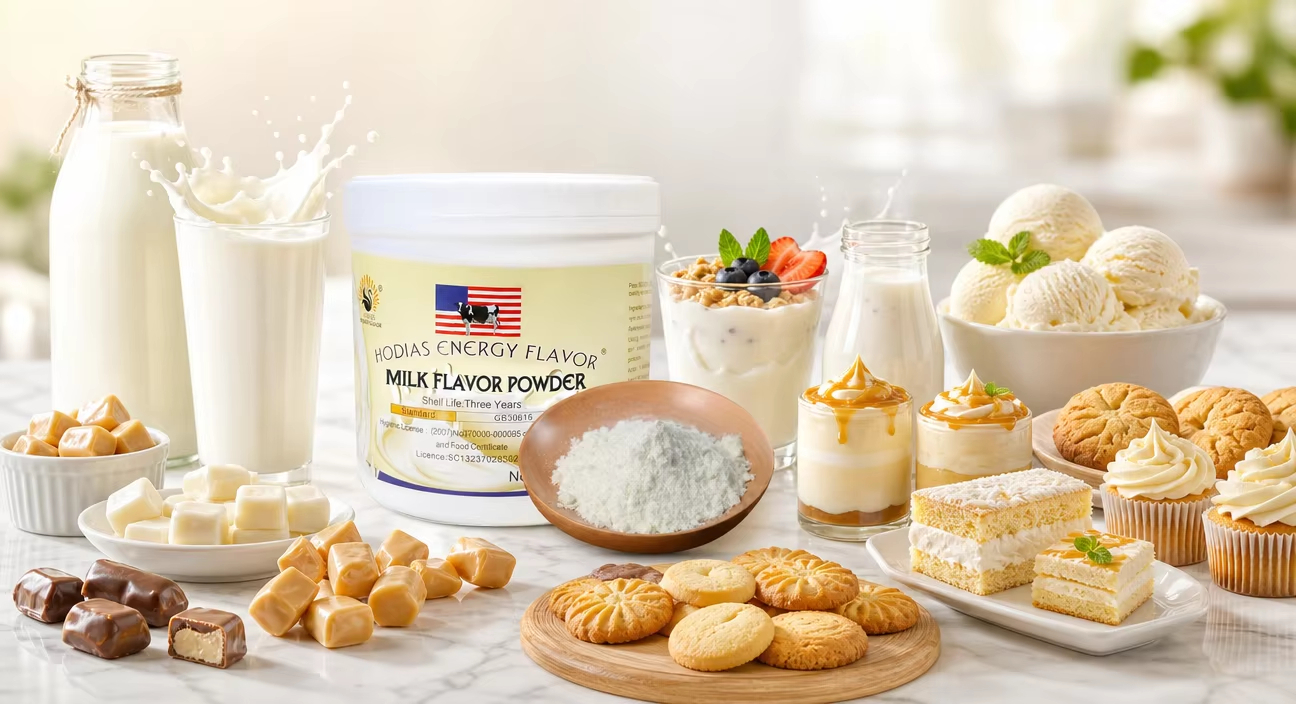
Milk
-
Coffee
-
Caramel
These familiar profiles are suitable for a wide range of product concepts, from traditional dairy ice cream to premium frozen desserts.
Manufacturers may also develop variations within these categories. For example, vanilla can be combined with caramel, while chocolate can be paired with coffee or nuts to create more distinctive products.
2.2 Fruit Flavors
Fruit flavors offer refreshing and diverse options for ice cream development.
Popular choices include:
-
Mango
-
Strawberry
-
Blueberry
-
Lemon
-
Peach
-
Pineapple
-
Passion fruit
-
Watermelon
Fruit-flavored ice cream is used in many product concepts, including dairy-based ice cream, fruit sorbets, and frozen desserts.
When selecting a fruit flavor, manufacturers should consider the desired balance of sweetness, acidity, and aroma. The flavor profile should complement the base formulation rather than overpower it.
2.3 Nut and Dessert Flavors
Nut and dessert-inspired flavors are often used to create richer and more indulgent product experiences.
Examples include:
-
Pistachio
-
Almond
-
Hazelnut
-
Coconut
-
Tiramisu
-
Cheesecake
-
Cookies and cream
-
Brownie
These flavors can also be combined with chocolate, vanilla, or caramel to create more complex product concepts.
For manufacturers targeting premium markets, distinctive dessert-inspired combinations can provide opportunities for product differentiation.
2.4 Innovative Flavor Combinations
Beyond traditional flavors, manufacturers are increasingly exploring creative combinations to attract consumers looking for new experiences.
Some examples include:
-
Mango and passion fruit
-
Strawberry and yogurt
-
Chocolate and orange
-
Coconut and pineapple
-
Matcha and vanilla
-
Coffee and caramel
The key is to create a balanced flavor profile. A successful combination should allow the individual flavor notes to complement one another without making the overall taste confusing or excessively strong.
3. Different Types of Food Flavors for Ice Cream Manufacturing
Food flavors are available in different forms. The most suitable option depends on the ice cream formulation, manufacturing process, equipment, and desired application.
3.1 Powder Flavors
Powder flavors are available in dry form and can be considered for ice cream premixes and selected manufacturing processes.
Potential advantages include:
-
Convenient handling and storage, depending on the formulation.
-
Compatibility with certain dry ingredient blending processes.
-
Suitability for applications where a powdered flavor ingredient is preferred.
Manufacturers should evaluate the powder's dispersibility, solubility, and compatibility with the other ingredients in the formulation.
3.2 Liquid Flavors
Liquid flavors are widely considered in food manufacturing because they can be incorporated into many liquid or semi-liquid formulations.
For ice cream production, liquid flavors may be suitable for applications where the flavor needs to be mixed into the ice cream base.
Important evaluation points include:
-
Compatibility with the ice cream base.
-
Flavor distribution during mixing.
-
Flavor intensity at the intended dosage.
-
Performance during freezing and storage.
3.3 Oil-Soluble Flavors
Oil-soluble flavors may be considered for formulations containing fat-based ingredients or for applications where compatibility with the fat phase is important.
Since ice cream formulations can contain milk fat and other fat-based components, manufacturers may evaluate oil-soluble flavor options based on the specific product system.
The final choice should always be confirmed through formulation trials rather than relying on the flavor's physical form alone.
4. Key Factors When Selecting Flavors for Ice Cream
Choosing a flavor for ice cream manufacturing requires careful evaluation. A flavor that works well in one food application may not deliver the same result in another.
4.1 Flavor Compatibility with the Ice Cream Base
Ice cream formulations may contain milk, cream, sugar, stabilizers, emulsifiers, and other ingredients.
These components can influence how a flavor is perceived and distributed.
Manufacturers should test whether the selected flavor complements the base and delivers the intended aroma and taste.
4.2 Flavor Performance During Processing
Ice cream production involves several stages, such as mixing, pasteurization, homogenization, aging, freezing, and hardening. The exact process depends on the product and manufacturing system.
Some flavors may be sensitive to heat or other processing conditions.
Therefore, manufacturers should evaluate flavor performance under their actual production conditions. Where appropriate, the timing of flavor addition can also be tested to help preserve the desired sensory profile.
4.3 Flavor Stability During Frozen Storage
A good ice cream flavor should maintain an acceptable sensory profile throughout the intended storage period.
However, freezing does not automatically guarantee flavor stability. Aroma perception and flavor release may change due to formulation, packaging, temperature fluctuations, and storage duration.
Manufacturers should conduct stability testing under conditions that reflect their distribution and storage environment.
4.4 Flavor Dosage and Intensity
The correct flavor dosage depends on the flavor concentration, formulation, and desired sensory result.
Adding more flavor does not necessarily produce a better product. Excessive flavor intensity may create an unbalanced taste, while insufficient dosage may result in a weak profile.
Pilot trials and sensory evaluation can help manufacturers determine an appropriate usage level.
5. How Food Flavors Support Ice Cream Product Innovation
Product innovation is important for manufacturers seeking to respond to changing consumer preferences and market opportunities.
Food flavors provide flexibility in developing new ice cream concepts.
5.1 Developing Regional Flavor Profiles
Consumer preferences vary across countries and regions.
Some markets may favor tropical fruit profiles, while others may show stronger demand for chocolate, coffee, nut, or dairy-inspired flavors.
Manufacturers can develop different flavor combinations to suit their target markets.
5.2 Creating Premium Ice Cream Products
Premium ice cream concepts often focus on distinctive and layered flavor experiences.
Examples include:
-
Dark chocolate with orange.
-
Pistachio with vanilla.
-
Salted caramel with coffee.
-
Coconut with mango.
-
Hazelnut with chocolate.
A well-designed flavor profile can contribute to the overall product concept and help distinguish a premium product from standard offerings.
5.3 Expanding Seasonal and Limited-Edition Products
Seasonal flavors can help manufacturers introduce variety and test new market opportunities.
For example, mango and watermelon may be considered for summer-inspired products, while chocolate, caramel, and cinnamon-inspired profiles may suit colder-season concepts.
Custom flavor development can help manufacturers explore these opportunities without relying only on standard flavor profiles.
6. The Importance of Custom Flavor Development
Standard flavors may meet many common manufacturing requirements. However, some products require a more specific flavor profile.
Custom flavor development allows manufacturers to work toward a desired taste, aroma, and application performance.
When developing a customized ice cream flavor, manufacturers should communicate several important details:
-
The target flavor profile.
-
The type of ice cream or frozen dessert.
-
The main formulation characteristics.
-
The expected processing conditions.
-
The desired flavor intensity.
-
The target market and consumer preferences.
-
Any relevant ingredient or regulatory requirements.
With this information, a flavor supplier can better understand the application and evaluate possible formulation directions.
At Hodias Group, we provide food flavor solutions in powder, liquid, and oil-soluble forms. With over 30 years of production experience and a team of more than 60 R&D and design professionals, we support customers exploring customized flavor solutions for different food applications.
Our OEM and ODM services also provide opportunities for manufacturers to develop flavor concepts according to their product requirements.
7. How to Work with a Food Flavor Supplier for Ice Cream Production
Choosing a suitable flavor supplier is an important part of product development and long-term manufacturing planning.
Before selecting a supplier, ice cream manufacturers should consider the following points:
1. Product Application Experience
Ask whether the supplier can understand your specific application and discuss the technical considerations involved in ice cream formulations.
2. Flavor Customization Capabilities
A supplier offering customized development may help manufacturers create distinctive flavor profiles for different product concepts.
3. Product Specifications
Review relevant product specifications, recommended usage information, ingredient details, and other documentation required for your market and application.
4. Sample Testing
Request samples and conduct trials using your actual ice cream formulation and processing conditions.
5. Batch Consistency
Discuss how the supplier manages product specifications and consistency between production batches.
6. Supply Capacity and Lead Time
For industrial production, reliable communication about minimum order quantities, production lead times, packaging, and shipping arrangements is also important.
A supplier that understands both flavor development and industrial purchasing requirements can make collaboration more efficient.
8. Conclusion
Food flavors play an important role in ice cream manufacturing. They help define product identity, create appealing sensory experiences, support product innovation, and provide opportunities for differentiation in competitive markets.
From classic vanilla and chocolate to tropical fruit and customized dessert-inspired combinations, the right flavor solution depends on the product formulation, processing conditions, storage requirements, and target consumers.
For ice cream manufacturers, selecting a suitable flavor involves more than choosing a popular taste. It requires application testing, careful evaluation, and cooperation with a supplier that understands the needs of food production.
Hodias Group provides powder, liquid, and oil-soluble food flavor solutions, along with OEM and ODM customization services. If you are developing a new ice cream product or looking for a customized flavor profile, our team can work with you to explore suitable options for your application.
Contact Hodias Group to discuss your ice cream flavor requirements and develop flavor solutions for your next product.
How Strawberry Flavor Powder Enhances Bakery and Food Products